Key Differences and Why Both Belong in Gainesville
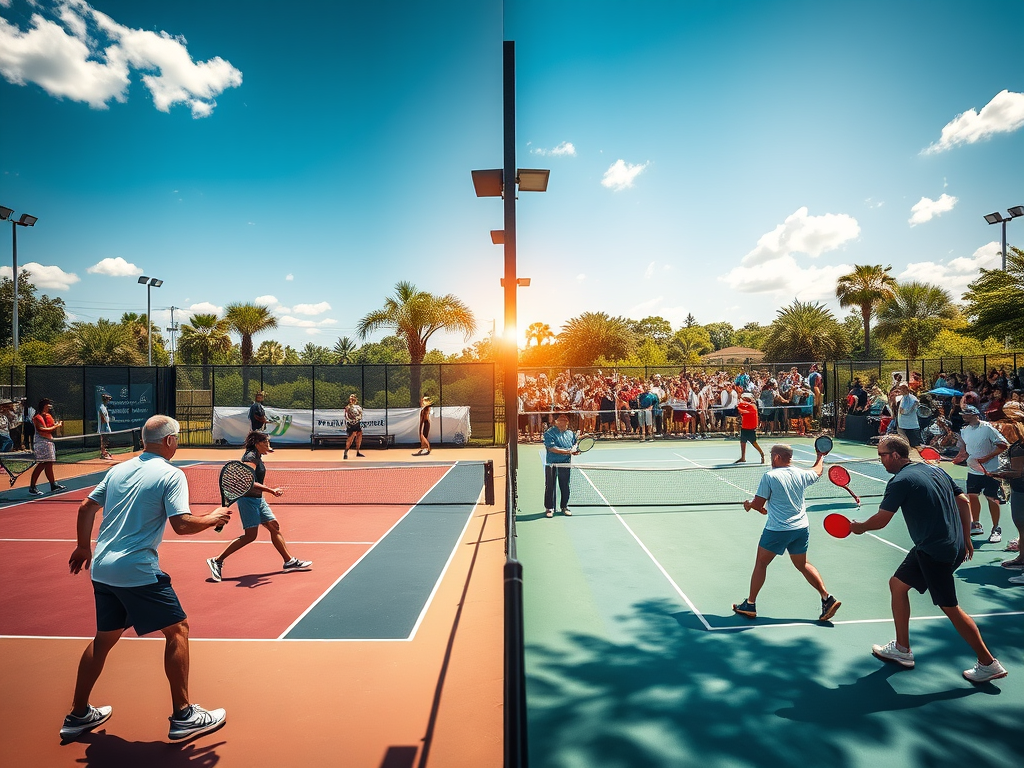
Padel and pickleball represent two dynamic racket sports that have gained prominence in recent years, each offering unique attributes that appeal to diverse participants. While both emphasize accessibility and social interaction, their distinct gameplay mechanics and court designs set them apart. In Gainesville, Florida, where recreational activities foster community engagement among residents and University of Florida students, these sports can coexist harmoniously, complementing established options like tennis. The Gainesville Padel Club (GPC) aims to introduce padel to the region, enhancing the local sports landscape without overshadowing pickleball’s established presence.
Core Gameplay and Rules
Padel is played on an enclosed court, roughly half the size of a tennis court, surrounded by glass and mesh walls that allow the ball to rebound. It is primarily a doubles game, using solid, perforated rackets and a depressurized tennis ball. Serves are underhand, and scoring follows tennis conventions, with points awarded in increments leading to games and sets. The walls enable extended rallies, incorporating strategic elements from squash, where players can utilize rebounds for defensive and offensive plays.
In contrast, pickleball occurs on a smaller, open court resembling a badminton layout, without enclosing walls. It employs paddles made of composite materials and a perforated plastic ball, promoting a faster pace with underhand serves and a non-volley zone near the net to prevent aggressive smashes. Scoring is straightforward, typically to a set number of points, and the game accommodates both singles and doubles, though doubles predominate in recreational settings.
These differences influence the learning curve: padel’s enclosed environment facilitates quicker mastery for beginners, as walls reduce out-of-bounds errors, while pickleball’s open design demands precise shot placement, appealing to those transitioning from table tennis or badminton.
Equipment and Physical Demands
Equipment for padel includes specialized rackets and balls adapted for wall play, with courts often featuring turf or artificial surfaces for consistent bounces. The sport’s physical requirements are moderate, emphasizing agility, coordination, and endurance through prolonged exchanges, making it suitable for various fitness levels and reducing joint strain compared to higher-impact activities.
Pickleball gear consists of lightweight paddles and wiffle-like balls, played on hard surfaces that enhance speed. It is renowned for its low-impact nature, ideal for older adults or those seeking gentle exercise, with shorter rallies that demand quick reflexes rather than sustained stamina.
Both sports prioritize inclusivity, but padel’s strategic depth suits tactical thinkers, whereas pickleball’s simplicity attracts casual players.
Popularity and Growth Trends
Padel has surged globally, particularly in Europe and Latin America, with increasing adoption in the United States, especially in Florida’s southern regions. Its appeal lies in social doubles play and year-round viability on indoor courts. Pickleball, originating in the United States, has exploded domestically, becoming one of the fastest-growing sports due to its ease and community focus, with numerous public courts available.
In Gainesville, pickleball enjoys strong local support through venues like Northside Park and The 300 Club, hosting leagues and events. Padel, however, remains absent, with the nearest facilities farther south, creating an opportunity for introduction without direct competition.
Why Both Sports Fit Gainesville’s Community
Gainesville’s active demographic, including students, professionals, families, and retirees, benefits from diverse recreational options. Pickleball’s accessibility aligns with public parks and low-cost entry, promoting widespread participation. Padel complements this by offering a novel, enclosed alternative that encourages longer sessions and team strategy, appealing to those seeking variety.
The coexistence of both can enrich the local scene: pickleball’s outdoor emphasis suits casual gatherings, while padel’s indoor potential, as planned at GPC with climate-controlled courts, ensures consistency amid Florida’s weather. Shared social aspects foster cross-participation, potentially through hybrid events or shared facilities.
Economically, introducing padel could boost tourism and engagement, similar to pickleball’s impact on local tournaments. GPC’s integration of amenities like a lounge and Bitcoin features adds innovation, attracting tech-savvy users without detracting from pickleball’s grassroots charm.
In essence, padel and pickleball each contribute uniquely to Gainesville’s sports ecosystem, promoting health and community. Their differences ensure complementary roles, enhancing overall recreational diversity.
Join our waitlist at gainesvillepadel.club for updates. Explore our next article: “Health Benefits of Playing Padel: Fitness, Fun, and Social Connections.”

Leave a comment